Socialising

I went to a birthday party yesterday with the two older girls whilst Jacob stayed with his Dad and the twins. He finds parties a bit too much of a sensory overload. I brought him some cake and a sweet cone home though so he didn’t completely miss out.

While we were gone, an Air Ambulance landed near to our house and the crew let Jacob sit in it which he enjoyed. He absolutely loves the Emergency Services. Once while we were on our way to Wales for a holiday, he talked his way into a sit in a Police Car as well!

Hopefully for the first and last time 🤪🤪

#pathologicaldemandavoidance #pda #PDAAUTISM #autism #senparent #senparenting #improvingoutcomes

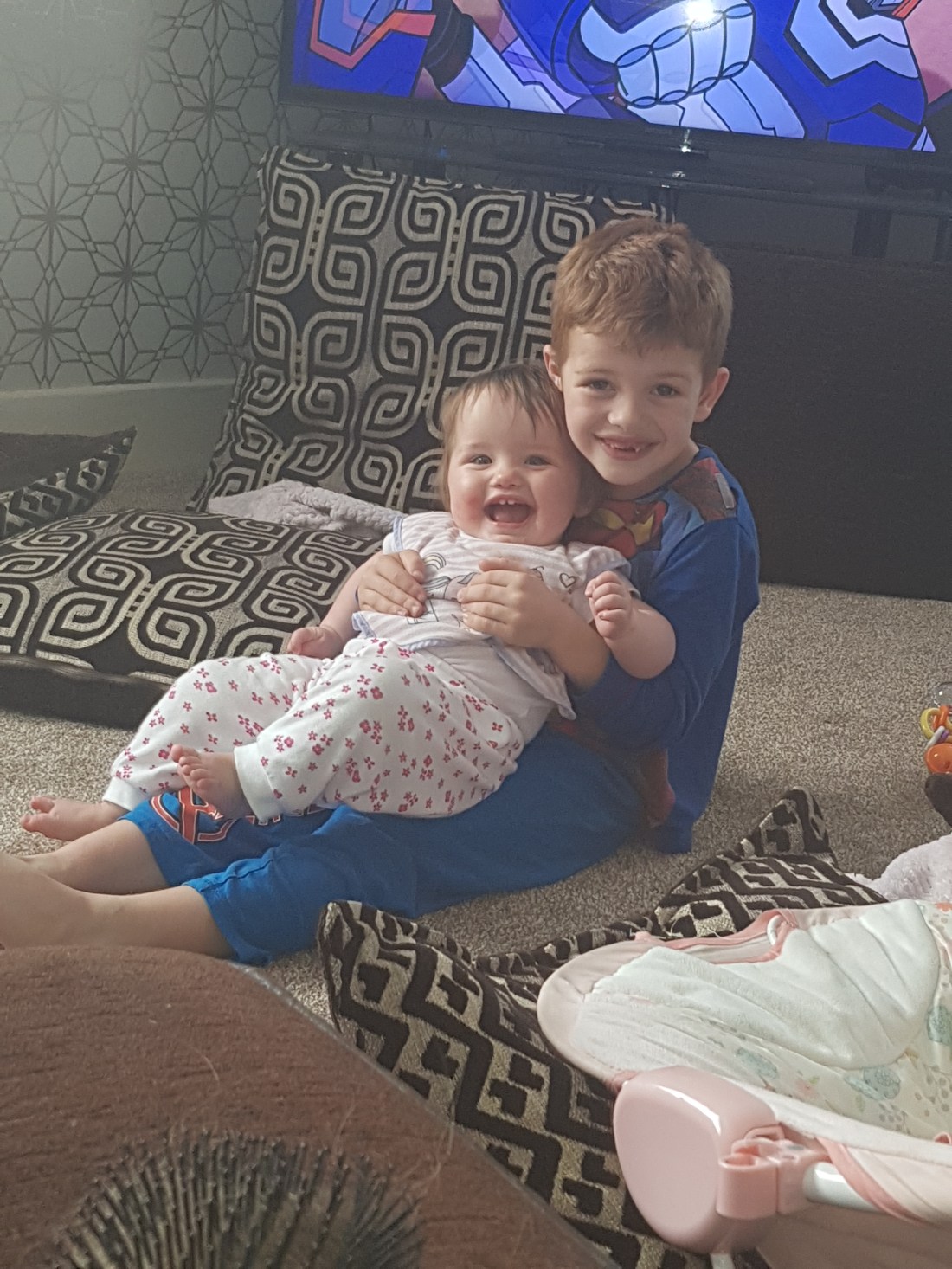
Siblings

One concern for me is how J’s autism could impact on his sisters. My eldest child (Lily) and my third child (Isabelle) are 32 months apart in age, with J between them. So obviously they are all very close in age. Come September, they will be Y3, Y2 and Y1 which is pretty intense without factoring in PDA.When J was diagnosed, we took the decision to not tell him or the others of his diagnosis as we weren’t sure any of them were old enough to understand what autism is. Lily, who is incredibly perceptive, and nosy 🤣 quickly picked up on it. She heard us talking and has a couple of children in her class who are autistic so she was familiar with the term.After I broke the news to Jacob that he would have to move schools, he asked me “what’s wrong with me Mummy?”. I took the decision then to find a social story video on YouTube and let J watch it. He watched it and said “that boy is like me” and I said “yes, there’s nothing wrong with you though”. He accepted this, asked a couple more minor questions and that was that. I’m unsure how much Isabelle understands about it but she’s only 5 so I haven’t made much of a deal about it.J struggles massively with crowds/groups of people, too much noise, sensory overload etc so attending parties or social gatherings often prove too much for him. His Dad is very much the same so me and the 2 older girls (we are all very sociable) often attend events. Doing something with all 7 of us is quite difficult and tends to work better if it involves at least one other adult.To their credit, the girls handle it very well. His twin sisters absolutely adore him. He’s a ready made Court Jester to them and their eyes light up when they see him. He probably gets the most belly laughs out of them of anyone!I asked Lily for her views and this is what she said:🔶️Things she enjoys🔸️Sometimes he lets me play with his lego🔸️We do quizzes together🔸️He asks me about school as I’m a year older and I like that🔶️Things she finds difficult🔸️Sometimes he doesn’t want me in his room🔸️He gets angry sometimesI suppose it’s all they’ve ever known so it’s just the way things are to them. I hope that as they all grow, they’ll be comfortable voicing if they are finding anything difficult to manage.#pathologicaldemandavoidance #pda #PDAAUTISM #autism #senparent #senparenting #improvingoutcomes

The EHCP process

The next thing I want to cover is a little bit about EHCPs.

🔹️What is an EHCP?

An EHCP is an Education Health and Care Plan. This is a legal document which outlines a young person’s (YP) special educational needs, how these can be supported and the outcomes the YP (or their parents/carers) would like to achieve.

🔹️How to get an EHCP?

If a school is not willing, or is stalling, you can apply for an EHC needs assessment yourself. The threshold is law is actually very low in deciding whether to carry out this assessment or not.

They must consider:

Whether the child or young person has or may have special educational needs (“SEN”); and

Whether they may need special educational provision to be made through an EHC plan.

If the answer is yes, the LA (Local Authority) MUST carry out an assessment. This is set out in law.

From my experience in EHCP groups, often the LA refuses to assess and then concedes if the Parents appeal so don’t be discouraged!

🔹️How long does the process take?

In short a long time, 20 weeks if all goes smoothly although I have heard of people going to various Tribunals and it ending up taking years!

🔹️Checking the draft

If you are awarded a draft, you need to check that Section B contains all of the YP’s needs and that Section F should contain provision to meet the needs in Section B. If it doesn’t, again appeal.

Watch out for words such as “regular access to” as regular isn’t quantifiable. Regular could mean daily, weekly, even twice yearly. It needs to be clear, what, exactly how often who by and what qualifications they should have.

This is a very very brief outline, for further information see IPSEA’s website as that explains all the stages and how to appeal. There is also a great Facebook page for help with EHCPs xx

https://www.ipsea.org.uk/Pages/Category/education-health-and-care-plans

Current school situation

I was asked to look into J moving schools on the Friday before the last week of School. I took the decision to keep him off from School for the majority of the last week as I felt one more fixed term exclusion would signal the end of him being on roll at his current school.

I’m approaching week 12 of the EHCP process and draft *should* be in place by week 16, if they agree to issue one of course. I’m quietly hopeful as we happen to have a very good Educational Psychologist on board and going on her report I’ll be very surprised if they don’t agree to issue. Although in the back of my mind, I know that one mustn’t count their chickens lest they fail to hatch!

I spent the entire of the last week of school ringing round every LA specialist provision in our city. The consensus I got, which was verified by the LA Autism Education Team, is that there is a lack of provision for academically able autistic children. According to figures on the National Autistic Society, ‘63% of children on the autism spectrum are not in the kind of school their parents believe would best support them’. I find this both a travesty and sadly, not a surprise.

I cast the net wider and began to contact Section 41 schools and Non-maintained Special Schools. I found a Section 41 school which I felt would be perfect for our son however I was told their next planned admission for a PDA child is September 2020! Even if they had places, it would then mean a fight to get the LA to agree to fund the place.

J’s Dad and I went to visit a school last week which falls under the NMSS category and we both thought this would also be a good fit so I think that will be the school I name if and when the EHCP lands. I keep trying to put it to the back of my mind but when your child’s future is uncertain, it’s impossible to do so.

I’m hoping and praying he will be offered a place at this school and as they don’t take children under 7, and J isn’t 7 until October, we can do a gentle move from his current school into the new one and he can say his goodbyes to his current staff and classmates. Essentially it’s heartbreaking but I have to remind myself that I’m his advocate for the time being and I have to try and keep my own emotions aside.

Our story part 7

Armed with his diagnosis I was hopeful, although probably naïve, that now we knew his diagnosis things at School may improve.

The important thing to note is that the conventional strategies used with ASD children in general are not effective with PDA children. A child with PDA can even avoid doing something they WANT to do if they feel as though it is a demand.

A PDAer requires a flexible, non-directive approach that allows them to feel as though they have a choice. As you can probably imagine, the school day is a whole series of “demands”. No matter how politely they are phrased. Come to the carpet, get your maths book out, time for lunch, reading book time, pencils away, coat and bag on. A long string of demands.

Approaches to parenting PDAers seems to vary quite a bit in the PDA groups I’m in. Some remove all demands from their child’s life. I sort of adopt a middle ground and think that to shield him from demands completely will not be helpful to Jacob in later life. Particularly looking forward to the world of work. However, just because my approach may be different, I would never be critical as parenting a PDAer is insanely difficult.

I sometimes, or rather a lot of the time, have to pick my battles wisely. For example, if Jacob doesn’t want to put on his coat does it REALLY matter? If he wants to do his reading book wandering about the room, does it REALLY matter? When it comes down to his safety, or the safety of others, I see this as non-negotiable. This level of flexibility isn’t really conducive to a mainstream classroom with 30 other kids.

I applied for an EHCP for Jacob in mid-May, I will post further details about this process in due course. He ended the school year with 8 fixed term exclusions and with the School asking for a ‘Managed Move’. This is essentially a nice euphemism for “jump before pushed” 🤣.

So if you’ve managed to stick with me up to now a huge well done! Other than the next steps for us school wise, which are currently uncertain, that’s you all caught up to our story to date xx

#pathologicaldemandavoidance #PDAAUTISM #autismfamily #autism #senparent #senparentingo
Our story part 6

The assessment day finally upon us, his Dad, Jacob and I set off for the appointment. My own anxiety was through the roof as I don’t like going to places I’m not familiar with at the best of times and this felt like a really big deal. It was everything I’d pushed for for 5 and a half years. I was especially worried as even though I was sure Jacob had autism, I couldn’t fight the niggling in the back of my mind that they would say he was simply naughty or that we were just not parenting him correctly.

The assessment felt like the end in some ways but also the beginning in others. If he came away undiagnosed then we were back to the drawing board. If he came away diagnosed, I didn’t know whether his ASD diagnosis would come detailing the PDA element as I was already aware some Counties in the UK don’t acknowledge it in the diagnosis. For our friends in the US, it isn’t diagnosed at all. Diagnosis doesn’t change anything really, it just gives you the correct knowledge to know how to attempt to make things better.

In the end, I needn’t have worried. After an hour and a half assessment they Clinical Psychologist and Speech & Language Therapist came back in the room after deliberating, sat down and the CP said “have you heard of PDA” I allowed myself nothing more than a nod. She went on to say “that’s what he has although we don’t give it as a stand alone diagnosis”. We came away with ASD with an extreme demand avoidant profile. All his reports state PDA though and I knew that was the best I could hope for.

I’d seen my sister the day before the appointment and she sensibly told me to “not pin all my hopes on coming away with the diagnosis there and then” although she more than agreed that Jacob fully fitted the profile. The first thing I did when I came out is sent her a picture of the diagnosis sheet they gave us. I couldn’t believe it. I expected a fight or at the very least several follow up appointments.

I honestly didn’t know how to feel at that moment – I was happy, sad, shocked, numb. All emotions clashing with each other and I didn’t know what to think. In hindsight, I think I might have experienced a tiny inkling of my son’s “Busy Brain” (his words) that day!

#pathologicaldemandavoidance #pda #pdaautism #autism #senparenting #improvingoutcomes

Our story part 5

So those who have been paying attention will note that we first had concerns when Jacob was 18 months old. After HV, GP, CAMHS, GP, Community Paediatrics, CAHMS again, GP, MAST and Community Paediatrics again we finally got a referral for an ADOS assessment in January 2019. Brilliant I thought… but was then told it would be a further 18 months wait from referral to assessment.

I did understand MAST involvement but in my mind it would make far more sense to place families on the wait list from the start of them requesting an autism assessment rather than after being passed around the houses to various other organisations. If it turned out the child didn’t then need an autism assessment (as something else was behind the child’s difficulties) just take them off the waiting list. Apparently, that is too much like common sense though 😆.

Jacob, by this point, had notched up that many Fixed Term Exclusions that his school were looking at Primary Inclusion Panel to see if there was anything else they could be doing for him before Permanent Exclusion was the only remaining option available to them.

Due to the extreme deterioration in his anxiety levels, and behaviour as a consequence, myself and School constantly called the Hospital that were to carry out the assessment asking if they had any cancellations. We fell lucky and managed to get him a cancellation appointment in April 2019.

I was by now fully convinced that Jacob had PDA and was telling everyone who would listen. School were unconvinced. I think they thought more down the ODD route although they never said that. ODD can appear similar although is different.

As the assessment date approached, I debated with myself about mentioning PDA or not. I decided not to in the end as I wanted to know in my own mind I hadn’t influenced the diagnosis in any way.

#pathologicaldemandavoidance #pda #pdaautism #autism #senparenting #improvingoutcomes

Our story part 4

Continuing with our story, as Jacob’s problems escalated at school they escalated at home as well. We sought advice from Health Visitors as previously mentioned to no avail. There were countless trips to the GP, we were then referred to CAMHS who referred us to Community Paediatrics. Community Paediatrics suggested he did show signs of ASD and ADHD but adopted a wait and see approach.

Jacob was on to around his 4th Fixed Term exclusion in Y1 when we went back to the GP. A member of staff from School actually came with me to this appointment and we pretty much begged to try and get him seen again.

The GP referral ended up with CAMHS who held a multi-disciplinary meeting and referred us to MAST. We had MAST involved for a number of months. Their advice ranged from suggestions of boundaries, routine, discipline, good sleep habits, good eating habits and the suggestion that sometimes “children act out due to a lack of interaction as infants” and the often dreaded “Parenting Courses”.

During all this toing and froing between various professionals I heard a lot of “Jacob can’t be autistic because…”.

Most people are aware that Autism is a spectrum and people can vary in severity and ends of this spectrum. Jacob falls on the High Functioning end of the Spectrum with his cognitive ability however his social communication skills are woefully behind that of his peers.

A common misconception is if your child can give some eye contact they cannot be autistic or if they will engage (or appear sociable) with a professional that also means they cannot be autistic. I know that girls in particular can be difficult to diagnose due to their ability to “mask” their autism and “emmulate” others.

One day towards the end of last year, out of sheer frustration, I googled “atypical autism”. I had heard, as most people will have, of Asperger’s although I didn’t think that was a good fit for Jacob. I then came across Pathological Demand Avoidance and it was a serious 💡 moment for me. It was like someone had written down and described all Jacob’s attributes. I then set about joining PDA groups, looking at the PDA Society website and learning more about it.

#pathologicaldemandavoidance #pda #pdaautism #autism #senparenting #improvingoutcomes

Our story part 3

Jacob started school in September of 2017. Lily moved into Y1. Of the full academic year Lily had attended school, I received one phone call the whole time. This phone call was to say she’d been awarded Citizen of the Week for the whole school for how kind, caring and mature she was. This is again to be significant later when, as seems to be the case time and time again, I was blamed for Jacob’s “bad behaviour”.

The second he started school, with it’s constant demands, his anxiety ramped up and he became almost uncontrollable within the classroom. There was an incident with scissors and he cut his own hair followed by another incident when he cut another child’s hair. The other child’s mother was understandably concerned by this. I had asked the school after the first incident to keep scissors away from Jacob but the response was that it wasn’t fair to make them unavailable to the other children without them having to ask for them.

Then the constant phone calls began… Jacob has refused to line up; Jacob has climbed the climbing frame; Jacob has ran across the field. At one point he ran across the field and was cornered by 3 members of staff. He was 5 at the time. He stamped on one of the staff member’s feet and at this point received his first Fixed Term Exclusion.

The phone calls continued until they developed an anxious response from me and I jumped every time the phone rang. It got to a point where I would answer the phone with “what has he done this time” rather than “hello”. During this time, I was pregnant with the twins. I was classed as a high risk pregnancy due to having multiples, a previous premature birth (Isabelle was born at 30 weeks) and I had had 2 previous c-sections.

At this point, I requested a Home/School book take the place of the constant phone calls for the relatively minor transgressions of him not lining up etc and requested they only call me in the event of a major meltdown.

School called in the Educational Psychologist during his first year at School and even before seeing her report I had a major inclination that Jacob had autism.

#pathologicaldemandavoidance #PDAAUTISM #autismfamily #autism #senparent #senparenting

Our story part 2

Jacob sat, crawled and walked a little later than average although not outside what is classed as “normal”. I don’t recall his speech being delayed.

The first things that highlighted me to the possibility of something underlying with Jacob were sensory seeking behaviours. I didn’t really know much about autism before and hadn’t really been around anyone autistic so it didn’t immediately scream out to me that that’s what it was.

He was about 18 months old at the time, around the time his second sister arrived, and up until having Isabelle I worked so Jacob and Lily attended Nursery full time. They also began to find his behaviour to be increasingly challenging.

All children, particularly toddlers, can be particularly challenging but with Jacob it seemed so much more than this. Most children can be praised, cajoled, chastised, bribed even into doing what you’ve asked of them. All of this was equally ineffective with Jacob.

I expressed concerns around his 2/2.5 year review with the Health Visitors although nothing came of this. The next significant milestone was starting school and this was when things really kicked up a gear.

#pathologicaldemandavoidance #PDAAUTISM #autismfamily #autism #senparent #senparenting